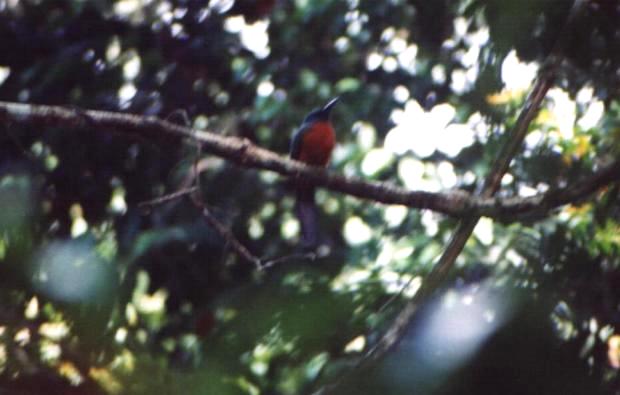
Great Jacamar (Jacamerops aureus)

|
Great Jacamar (Jacamerops aureus) |
|
| Foto's (klik er op om te vergroten) | ||
|---|---|---|
 © Peter Relson | 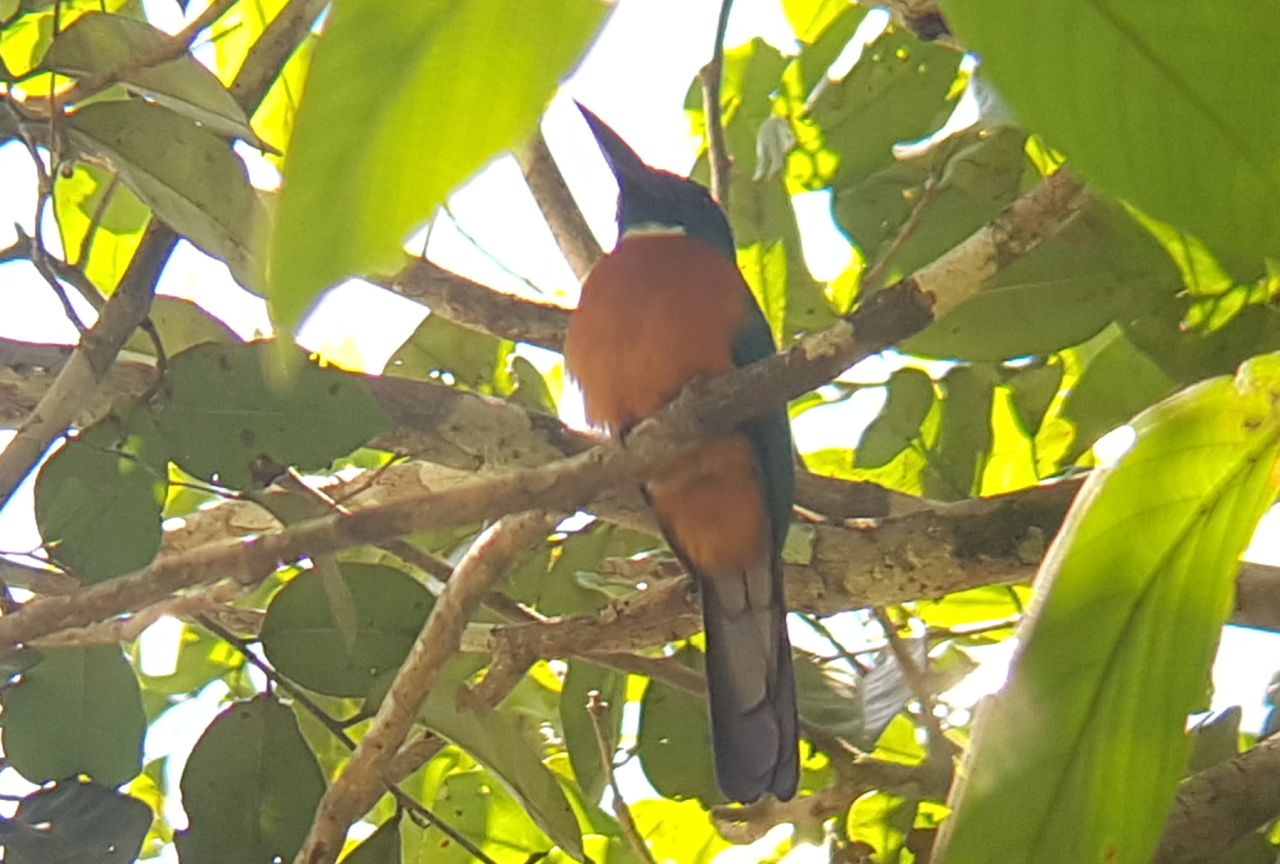 © Ralf Boobo | 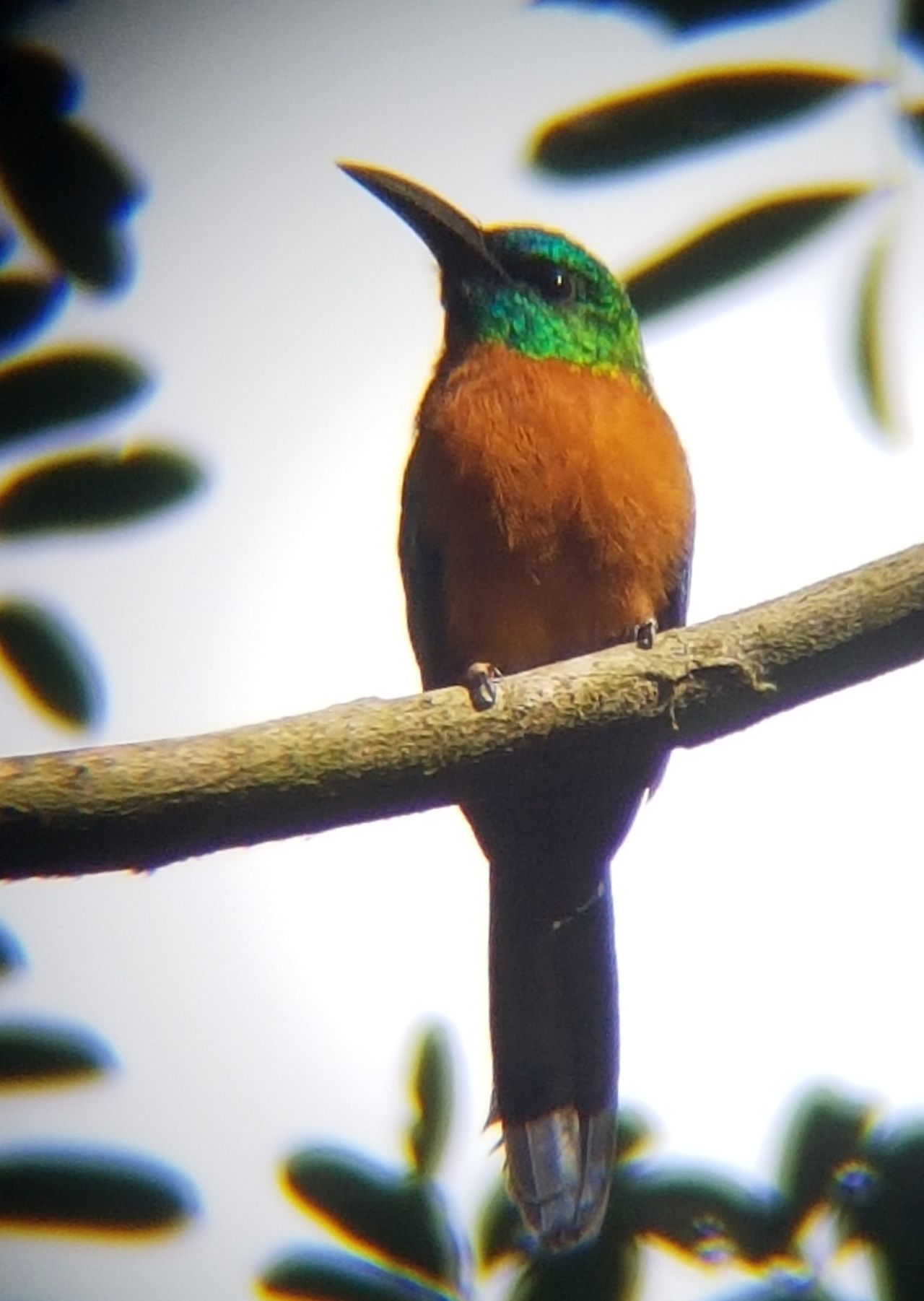 © Klaas de Jong |
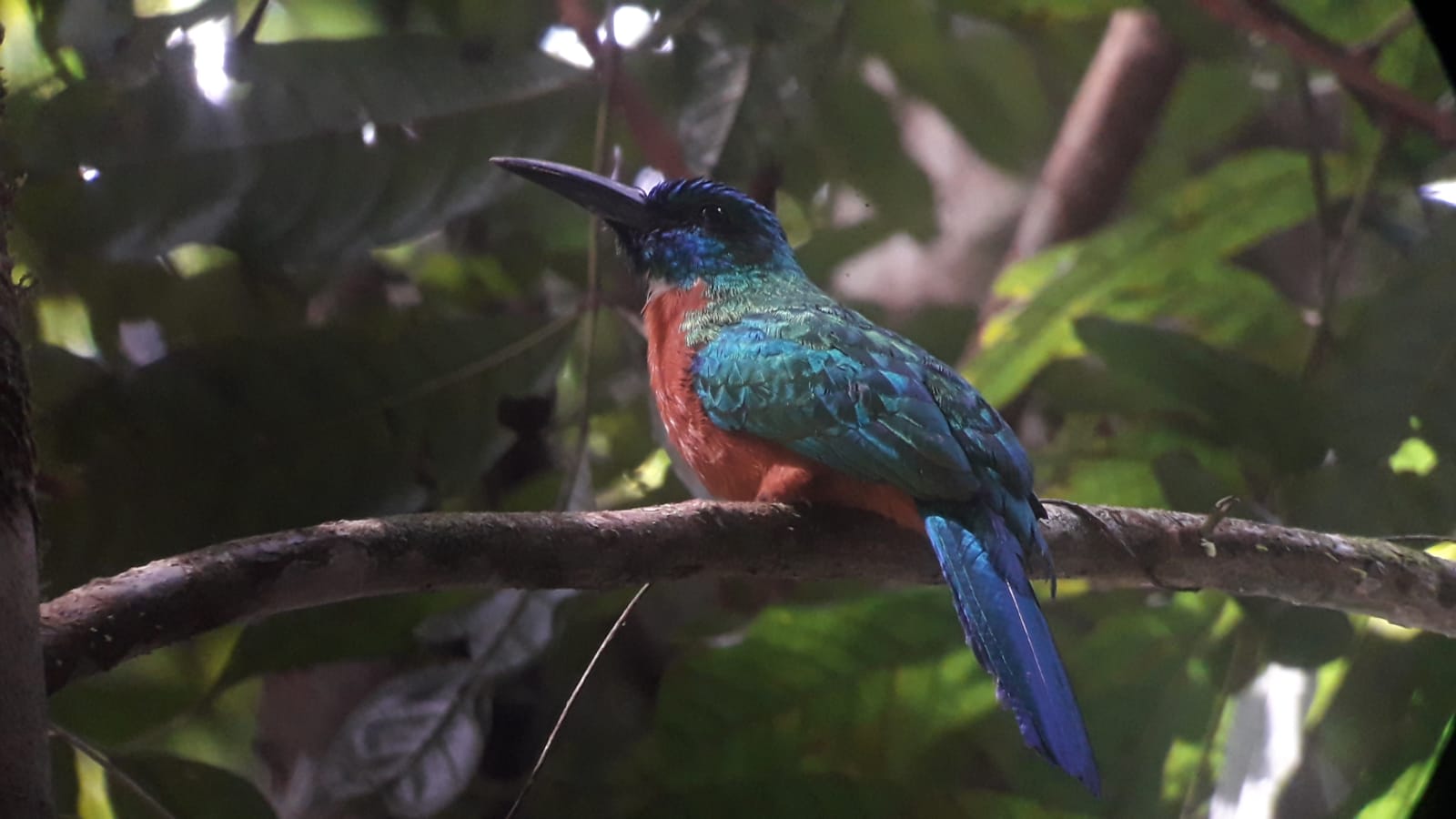 © Fred Pansa,, ecotours |
| Foto van een vrouwtje van de grote glansvogel, gemaakt door Peter Relson in Suriname in January 2002. Het mannetje heeft een witte vlek op de keel, maar bij een foto ben je er nooit zeker van dat die zichtbaar wordt. Deze glansvogels blijven lang stil zitten op een tak om af en toe weg te vliegen om een prooi te pakken, grotere insecten en spinnen. Je vindt ze midden in het oerwoud, bijvoorbeeld bij de Ralleighvallen. Het geluid werd door Otte Ottema opgenomen op de Tafelberg. Fred Pansa maakte een video in november 2022. |
| Vogelgeluiden (klik er op om te luisteren) | ||
|---|---|---|
| Geluidsopname van een Grote glansvogel © Otte Ottema, bird guide |
| Video (klik op de link of op de 'play'-knop om te kijken) | ||
|---|---|---|
| Video opname van een Grote glansvogel © ; |
|
|
||||||||||||||||||||||||||||||||||||||||||||
| Verdeling van waarnemingen over het jaar | Waarnemingen van broeden over het jaar |
|---|---|
| The 137 reported observations of this bird in Suriname, mainly for the last 50 years up to 2018, have been grouped by month. More birds on one day are counted as one observation. Of course, if the graph should depict the total number of birds seen, the differences between the months could be much more pronounced. | The reported breeding observations of this bird in Suriname. Most observations are about nest with eggs, some about fledglings, or feeding at a nest or the building of a nest. Of the about 5000 nests and eggs found for all species together, about 1/3 comes from the egg collection of Penard between 1896 and 1905. For some reason most collecting then was done in the first half of each year, so the shown distribution does not necessarily reflect the actual breeding preferences. The main dry season in Suriname is reckoned to be from half August to the end of November, the main wet season from half April to half August, but the the timing of begin and end does vary from year to year. Around March a second dry season often occurs. |